Are We Really at War?

With much respect for those on the health care lines, always, including the patients, I bow to you. I also want to take a moment and express my concern around the  “war”  language blooming in these deeply strange and ambivalent times. To go to “war” on something that “doesn’t want to fight with you,” is a narrative, after deep thought, that I’d like to see retire. – The Saving lives as a Battle – The War on Drugs – The War on Poverty-  When we use terminology such as battle, fight, kill what are we communicating to the layperson?  To the sick?  To the vulnerable? To ourselves?  Do we call it a “fight,” to perhaps soothe our very own fear of mortality, stroke our egos; ease our pains?

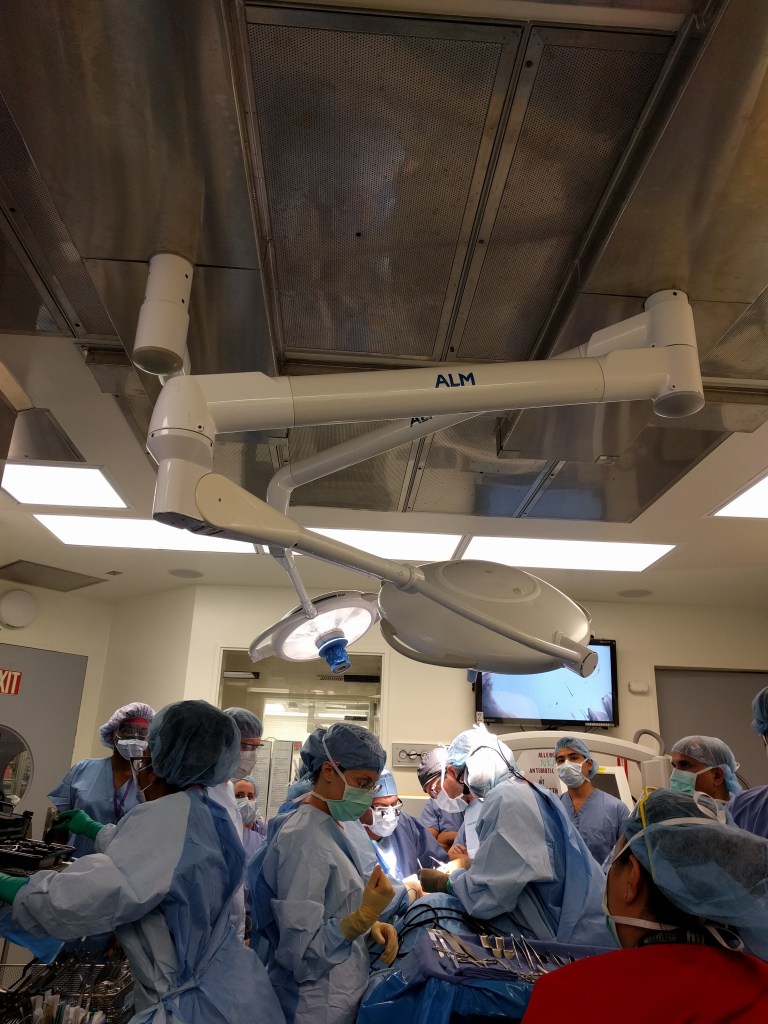
Our health isn’t an absence of illness whether acute or chronic. It’s neither an absence of virus, trauma, tumors, infection or mental affliction. These pieces, either one or/and the other that may visit us one day or already do, are parts of our WHOLE health.  Just as poverty and drug addiction are pieces and reflections of a society and its health at large. We don’t need to battle it. We need to understand it from a holistic lens; to view the bigger canvas. We need to treat a human being undergoing surgery, as a whole being, not as parts to a car. Even treatment from a microscopic realm includes vast geography. These parts of me , you, society are not intentionally trying to battle us.  So why wage a war?  

I ask, “Is there an alternative expression for War?”  I don’t know, but I think it’s time to grow out of hostile acts, upon the Other and most importantly, our Selves.  

Are We Human Or Are We Heroes?

The collaboration and solidarity I and we have been observing in these times, is a powerful testament to the impact Medicine and our Health Care system has on our communities and individuals. I do however question many responses, mainly from a humanistic perspective. I am curious about this very virus and what will soon be revealed, or not. More recently, I’m perplexed with the “hero” archetype. My concern with heroes, especially in medicine is, “Who are we when we don’t save the day?” Save a life.  Make a mistake. Die on the line or for that matter, commit suicide.  And the latter is not a new scenario as, “Doctors are far more likely than the general population to die by suicide.”  (NPR.org 2018)

Pursuing the art of medicine to be another’s hero never sat well with me. Have I been a participant in the betterment of one’s illness, acute or chronic?  Yes. A guide, so to speak, that has used her knowledge and skills to the best of her abilities, or so I can only hope?  Yes. Have I educated, hung treatments, lead codes, witnessed miracles such as birth and passages of death?  Yes. Have I felt a surge of energy and enthusiasm around a crisis?  Yes. Have I felt proud? Yes. More potently however, I have been humbled. Humbled by the bravery of my patients and their loved ones. To go to a hospital in need of help is a bold and vulnerable act. Likewise, to be in service to those in need requires courage and vulnerability. This relationship involves a great deal of trust.  And on occasion, the recipient of our best care doesn’t make it to see another day.  

I have been both witness to and in the patient role in my days.  I request no one be my Hero, only to use their scientific minds wisely and with flexibility. To listen. To hear and see not only with their heads.  To apply the principles of Hippocrates and to perhaps reflect on a new Health Care Ethos.  A humane ethos that has not only patient’s wellness at heart but providers as well.  A slowing down versus powering through.  A dismantling of Saintly Doctors and one of the most recent(disturbing) narratives, “Murderous” Nurses.  I end with the question.  Are we  Human or are we Heroes?  Perhaps we tend to our own personal Hero’s journey, as we unknot our capes and sit at the bedside; taking a glimpse at the insurmountable beauty and mystery before us. Another Human. Another You.